
A SAFE SPACE IN CHALLENGING REGION
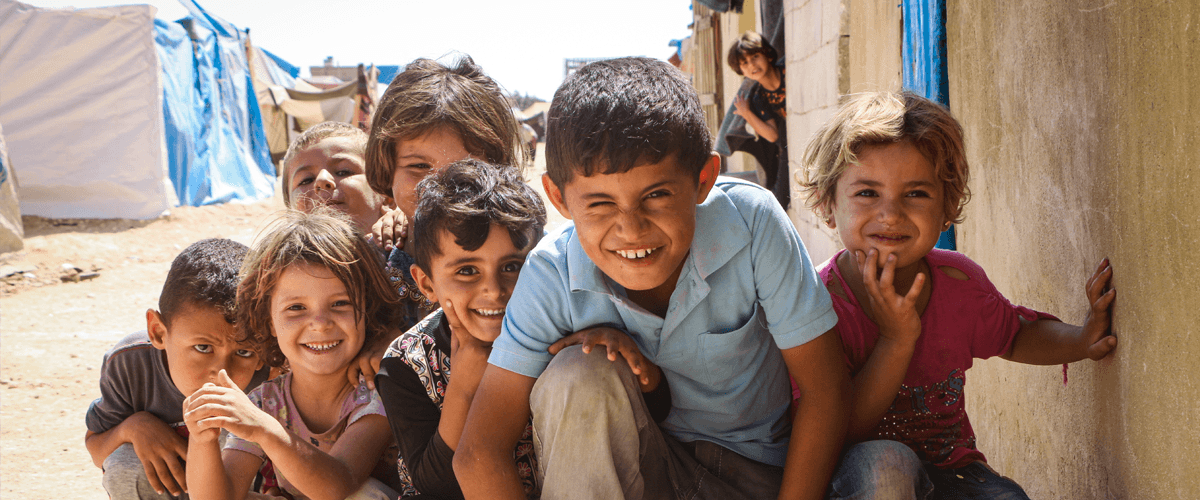
Children and young people should grow up in an atmosphere of love, security, and freedom. But many young lives in the Middle East and North Africa (MENA) are blighted by conflict, insecurity, harmful social practices, and restriction. SAT-7’s satellite TV programs and digital content for children and youth provide a safe space where they can forget their troubles and learn of God’s love for them, while also developing important life skills to equip them as agents of positive change in their communities.
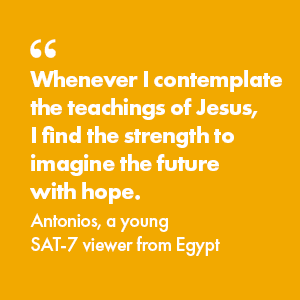
SAT-7 is committed to meeting the next generation where they already are, whether this is in front of the television screen, a computer, or a phone. Covering a broad range of concepts, topics, and styles, SAT-7 produces eye-catching and engaging content for young people and children in three languages on four TV channels, as well as on streaming service SAT-7 PLUS and social media platforms.
In the face of many challenges in the MENA region, this new generation is at risk of falling into disillusionment and hopelessness, and so SAT-7’s content is designed to capture young people’s hearts and inspire them as they learn about the Christian faith.
Conflict
According to UNICEF, one in two children in the MENA are affected by ongoing conflicts and violence[1] Whole generations of children in various parts of the region have lived their entire lives in countries affected by war. Thousands of children have been killed, with many more left traumatised, impoverished, and orphaned.
As schools, hospitals, and other vital services suffer damage, so do children’s prospects. An estimated 30 million children aged 5–18 are out of school across the region.[2]
Conflict is also fuelling a refugee crisis in the region. There are 6.4 million child refugees [3] in the MENA, who face multiple risks, including isolation, poor physical and mental health, child labour, and trafficking.
SAT-7 KIDS program We Grow Together is helping Arab children living through war, loss and other traumatic events, and providing a safe and nurturing space for spiritual growth. Blending Bible-based discussions, live music, prayer and testimonies, this live program helps young viewers to navigate difficult experiences with faith and wisdom.
“I always watch We Grow Together,” said Amanda, a teenage girl from Lebanon, “This program is wonderful and shares the word of God in a simple and easy way. We actually do grow together and continue on our path knowing that Jesus is with us.”
Insecurity
This next generation is experiencing a deterioration in quality of life for several reasons, including environmental and political challenges. Financial insecurity is plaguing families across the region. A recent study suggested that one-third of the Arab World now lives under the poverty line.[4] The MENA has the highest youth unemployment rate worldwide. In Lebanon in 2022, 31 percent of young people were not in education, employment, or training,[5] with many forced into informal work to contribute to household income. Lack of education and work over generations makes these young people vulnerable to radicalisation and hopelessness.
SAT-7’s five-year Youth for an Enabling Society (YES) project is designed to equip and encourage young people in the Arab world to invest themselves in their local communities and wider society, and to promote the social conditions that will enhance their freedoms and opportunities. You can read more about the project here.
Harmful social practices
Girl children are especially vulnerable in the MENA due to harmful social practices. Female Genital Mutilation (FGM), especially prevalent in northeast Africa, is proving difficult to eradicate. Child marriage is declining, but 700,000 girls still become child brides each year,[6] jeopardising their education and increasing the likelihood of their suffering domestic abuse.[7]
While most parents love their children and try to do their best for them, many are in need of support and advice. Without this, there is a tendency to rely on disciplinary techniques such as beating, shouting, and intimidation. Around 106 million (more than 8 in 10) children aged 2 to 14 are regularly subjected to violent discipline at home.[8]
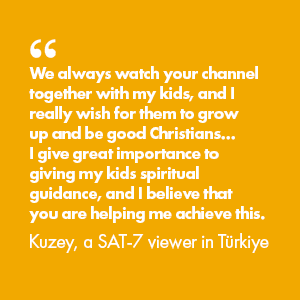
SAT-7’s parenting programs, such as Parents Ask on SAT-7 TÜRK, are equipping mothers and fathers in the region with positive techniques and biblical advice, helping them to build strong families and raise confident, secure children.
Restriction
Societal restrictions are widespread in the MENA, and young women are worst affected. For example, in Iran, the authorities impose compulsory veiling on girls from the age of seven, and in Afghanistan, the Taliban have banned women from public spaces and stopped girls from attending secondary school.
Young people wanting to follow Jesus experience various degrees of persecution, directly or indirectly. In particular, those who become believers from another faith background may be harshly treated by their families and communities and denied access to Christian community and resources. And those from Christian families can be deprived of their education in an attempt to intimidate their parents.
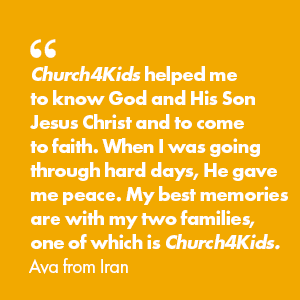
SAT-7 PARS is providing spiritual support for Persian-speaking children through the fellowship project Church4Kids. Through live Instagram streams, worship, teaching material, and one-to-one encouragement, Church4Kids enables children in Iran, Afghanistan, and Tajikistan to learn more about God together.
PLEASE PRAY:
- Pray that children and young people across the MENA will learn of God’s love for them through SAT-7’s programs and social media content.
- Pray that young viewers will grow in strength spiritually, mentally, and physically, and become positive agents of change in their communities.
- Pray for parents and other care-givers, that they will model the love of God for His children, and know His wisdom in raising their families.
Sources:
- [1] Child Protection | UNICEF Middle East and North Africa
- [2] Out of school children | UNICEF Middle East and North Africa
- [3] Middle East and North Africa Region Appeal | UNICEF
- [4] One-third of Arab population lives in poverty: ESCWA | Middle East Monitor
- [5] Searching for hope – a grim outlook for youth as Lebanon teeters on the brink of collapse | UNICEF
- [6] Facts and figures: Child marriage in the Middle East and North Africa | UNICEF Middle East and North Africa
- [7] Child marriage | UNICEF
- [8] A profile of violence against children and adolescents in the Middle East and North Africa | UNICEF